


Opening a Corporate Bank Account in Japan
While not legally required for company incorporation, opening a corporate bank account is an important step in conducting smooth business operations in Japan. Below is an overview of eligibility requirements, procedures, and key considerations when selecting a financial institution.
Requirements and Procedures for Opening a Corporate Bank Account
Opening a corporate bank account is not required to establish a company in Japan, but it can be highly beneficial. A corporate account helps build trust with customers and partners, and may affect access to financing as well as the number of clients and business partners you can attract. Corporate accounts can also offer functions that personal accounts do not, such as payroll processing and issuing debit or credit cards for employees, which can support clearer expense management.
However, banks typically require applicants to meet certain conditions (including residence status). As a result, it can be difficult for overseas residents or short-term visitors to open bank accounts. When applying for a corporate account, be mindful of your status of residence and the remaining period of stay.
STEP provides English-language support for banking procedures for individuals who hold a residency status that allows them to engage in entrepreneurial or business management activities. By collaborating with major banks and regional banks, STEP assists in preparing the necessary documents for opening bank accounts, supporting smooth business preparations.
1. Process of Opening a Corporate Bank Account
1-1. Prerequisites
- Having a residence card (at least six months remaining on your period of stay is recommended)
- Completion of corporate registration
- Creation and registration of personal and corporate seals
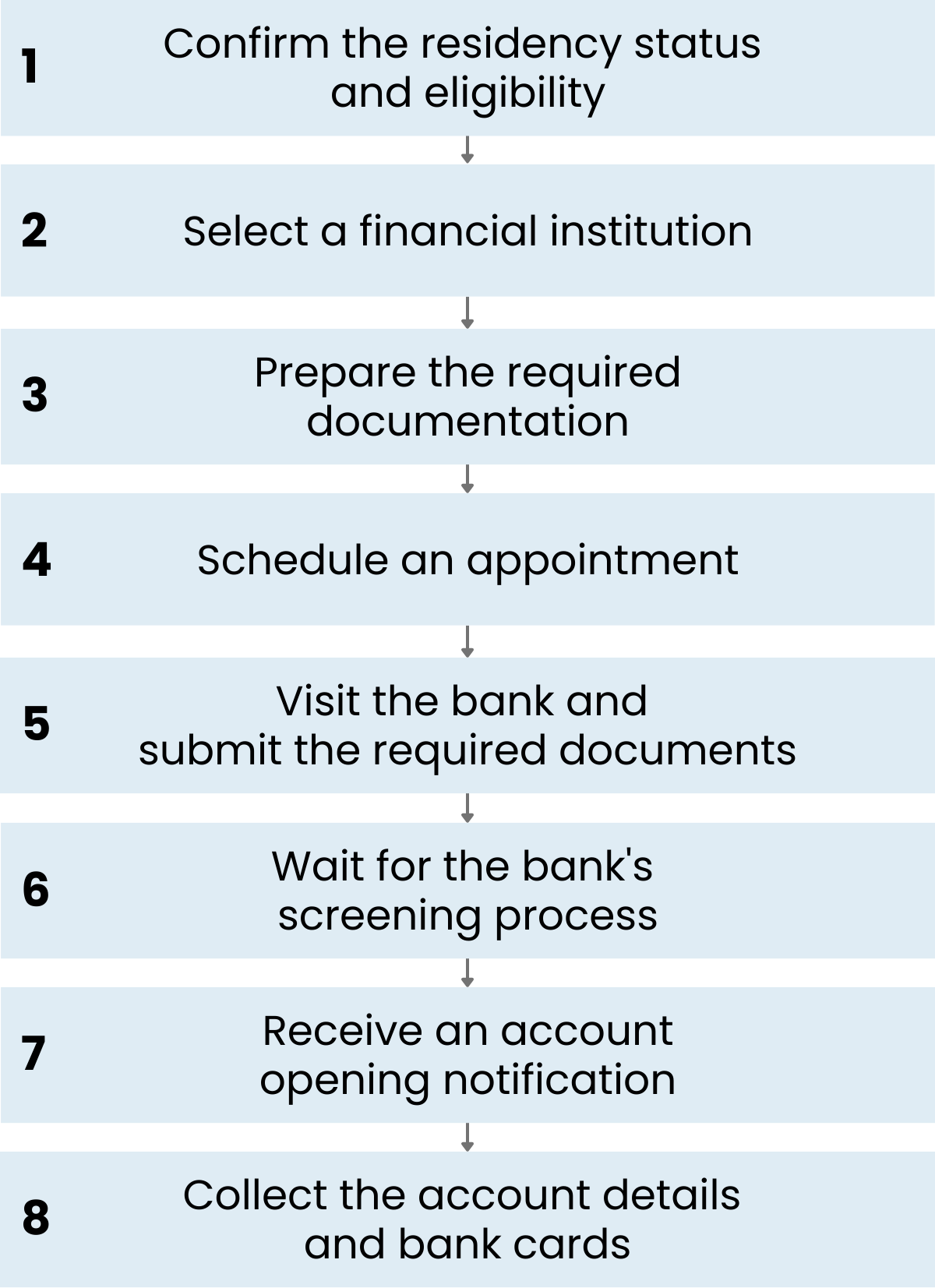
1-2. Standard Procedure for Account Opening
1-3. Eligibility for Foreign Nationals
- Permanent residents or holders of Spouse of Japanese National status
- Holders of Business Manager or Highly Skilled Professional (Business Management) status
- Holders of other entrepreneurship or work-related statuses, such as the Startup Visa
*Requirements vary by financial institution; the above are examples only
1-4. Choosing a Financial Institution
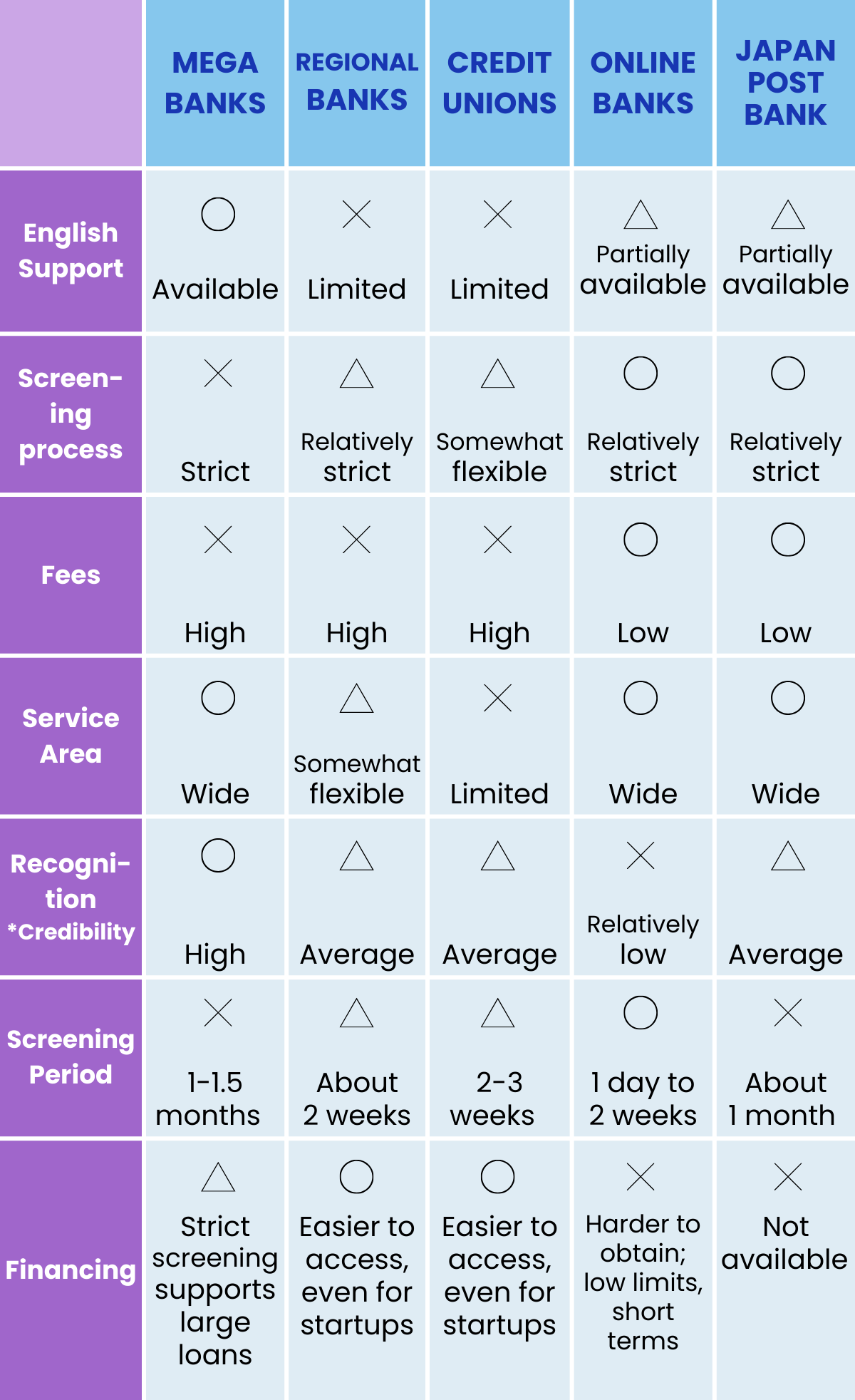
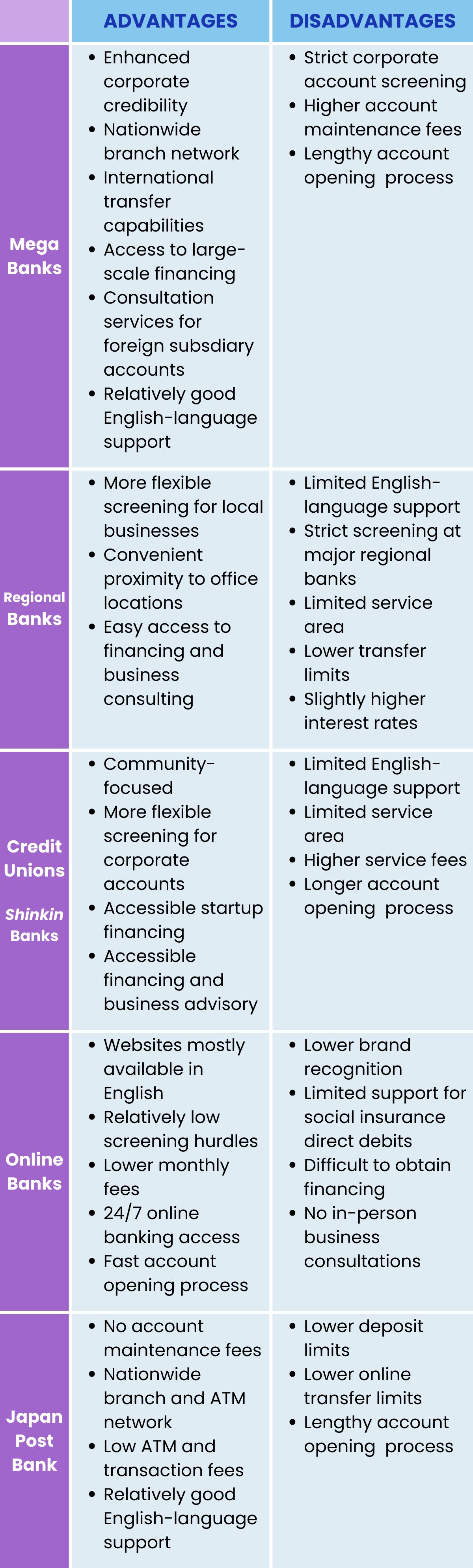
There are five primary types of financial institutions for corporations in Japan. It is important to compare their key characteristics, advantages, and disadvantages to find the institution that best aligns with your business scale and objectives.
1-4-1. Types of Financial Institutions Offering Corporate Accounts
- Mega Banks (Mizuho Bank, Sumitomo Mitsui Banking Corporation, and MUFG Bank)
- Regional Banks (Hokuyo Bank, Hokkaido Bank, Hokuriku Bank, etc.)
- Credit Unions (Shinkin Banks)
- Online Banks
- Japan Post Bank
1-5. Key Characteristics by Financial Institutions
1-6. Advantages and Disadvantages of Each Financial Institution
2. Required Documents
Recently in Japan, it has become increasingly challenging for foreign nationals to open corporate bank accounts. To ensure the process goes smoothly, it is necessary to prepare and submit as many supporting documents as possible that demonstrate the actual state of your business operations. Below is a list of generally required documents; however, please note that additional documents may be requested.
2-1. Personal Identification Documents
- Residence card
- Special permanent resident certificate
- My Number Card (Individual Number Card)
- Driver’s license
- Driving record certificate
2-2. Basic Corporate Documents
- Corporate certificate of registry (historical matters all records)
- Corporate articles of incorporation
- Registered corporate seal
- Corporate seal registration certificate
- Representative’s registered seal
- Representative’s seal registration certificate
- Representative’s ID
2-3. Additional Supporting Documents (Recommended if Available)
- Corporate number designation notice
- Copy of corporate establishment notification
- Copy of application for approval of blue tax return
- Copy of income tax return
- Tax payment receipts or certificates
- Social insurance premium receipts
- Utility bill receipts
- Office lease agreement
- Licenses and permits issued by government agencies
- Company brochures, pamphlets, and website printouts
- Business plan
- Copies of contracts with major clients or business partners
- Other materials verifying business activities