


A Low Natural Risk Business Environment
A Disaster-Resilient Business Environment
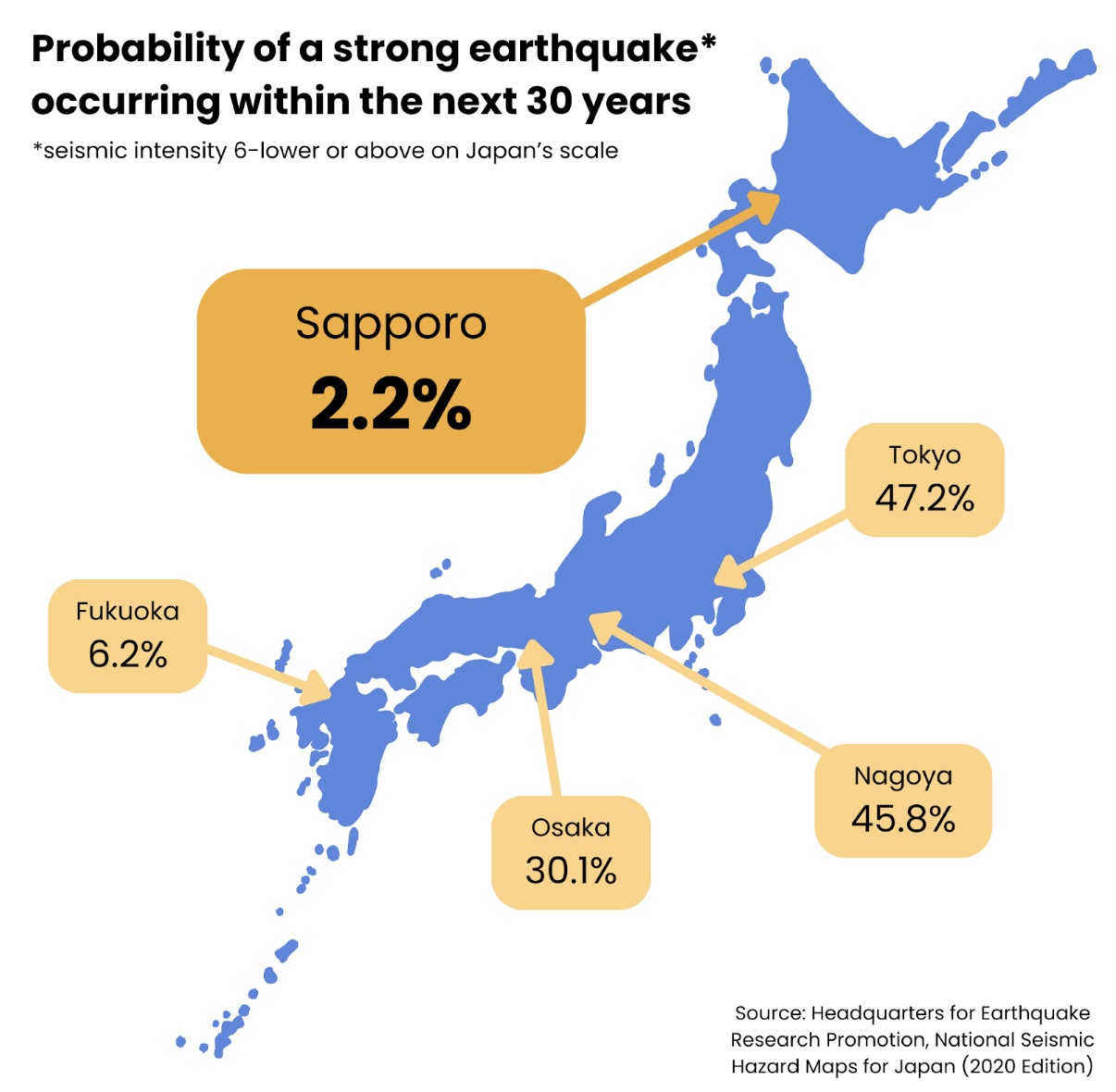
Among Japan’s major cities, Sapporo has an exceptionally low risk of earthquakes and typhoons.
With stable urban infrastructure, the city provides a highly secure environment for business operations.
Establishing a base in Sapporo means being able to invest and grow with confidence over the long term.

Extremely Low Earthquake Risk
The probability of an earthquake of seismic intensity 6-lower or higher occurring within the next 30 years is estimated at approximately 2%, which is extremely low among Japan’s major cities.
Sapporo is less affected by large-scale earthquakes due to the small number of active faults in the surrounding area and its limited exposure to subduction-zone (trench-type) earthquakes.
Extremely Low Typhoon Risk
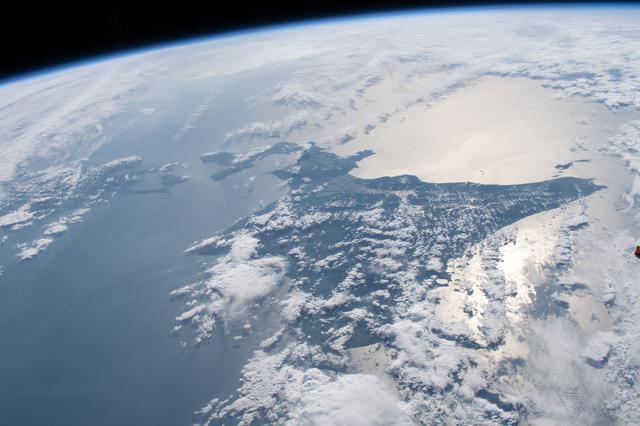
Because Sapporo is located inland in Hokkaido, it is rare for typhoons to reach the city.
As a result, serious damage from strong winds or storm surges is uncommon.
Living with Snow: A City Designed for Winter
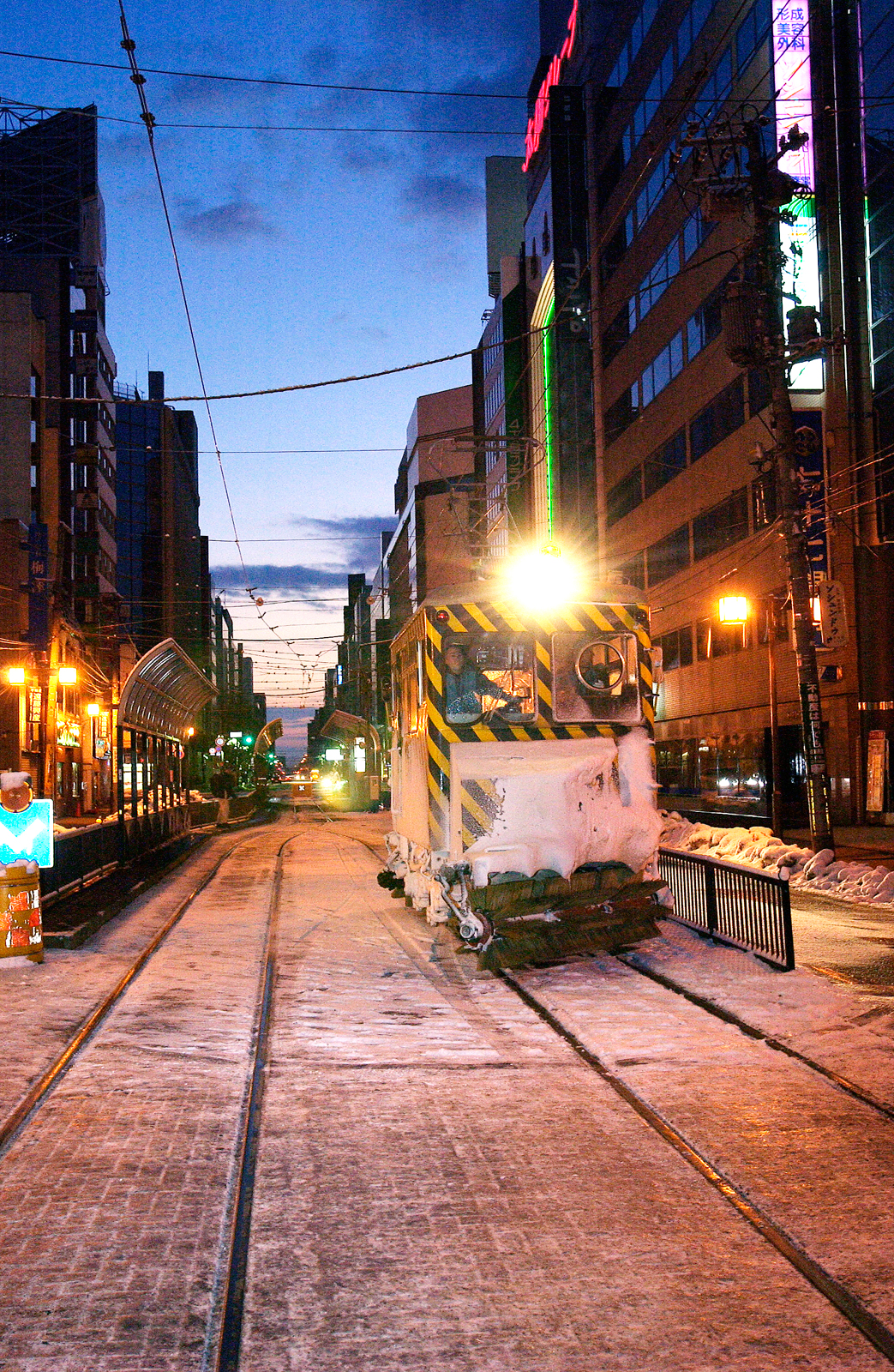
Sapporo is one of the world’s snowiest major cities, and snow is not treated as a challenge to overcome, but as an integral part of everyday urban life. Drawing on decades of experience as a Winter Olympics host city, Sapporo has developed a cityscape and infrastructure designed to live in harmony with winter.
Well-established snow management systems, including efficient road maintenance, snow-melting facilities, and underground pedestrian networks, ensure that transportation, logistics, and daily business activities continue smoothly throughout the winter months. Seasonal events such as the Sapporo Snow Festival further reflect how snow is embraced as part of the city’s culture and identity.
As a result, businesses benefit from year-round operational stability, while residents and employees enjoy a safe, comfortable, and uniquely vibrant quality of life — even in midwinter.
Resilient Energy Systems Using Local Resources
In central Sapporo, the city is strengthening energy resilience through distributed, self-sufficient energy systems designed to operate reliably both in everyday use and during emergencies. These include cogeneration and district-wide energy systems that efficiently share electricity and heat across urban areas.
A distinctive feature of Sapporo’s approach is the use of snow as a local energy resource. Snow cooling and snow storage systems are integrated into urban infrastructure, using naturally accumulated snow to reduce cooling demand and
support a stable energy supply.
By treating winter conditions as an asset rather than a constraint, Sapporo enhances both sustainability and disaster resilience.
These integrated energy systems help to maintain urban and business functions during emergencies, while also supporting decarbonization and efficient energy use year-round. In parallel, Sapporo promotes high-performance office buildings designed to support Business Continuity Planning (BCP), enabling companies to continue operations even under challenging conditions.
Benefits for Investors and Companies

High business continuity and operational resilience
Low disaster risk reduces the likelihood of business interruptions, providing strong reassurance from a BCP perspective.
Stable workforce and corporate activities
Employee safety and living infrastructure are well protected, enabling long-term, stable business operations.
A city chosen by overseas investors
Low natural disaster risk is a key decision-making factor for overseas companies when selecting a base in Japan.